







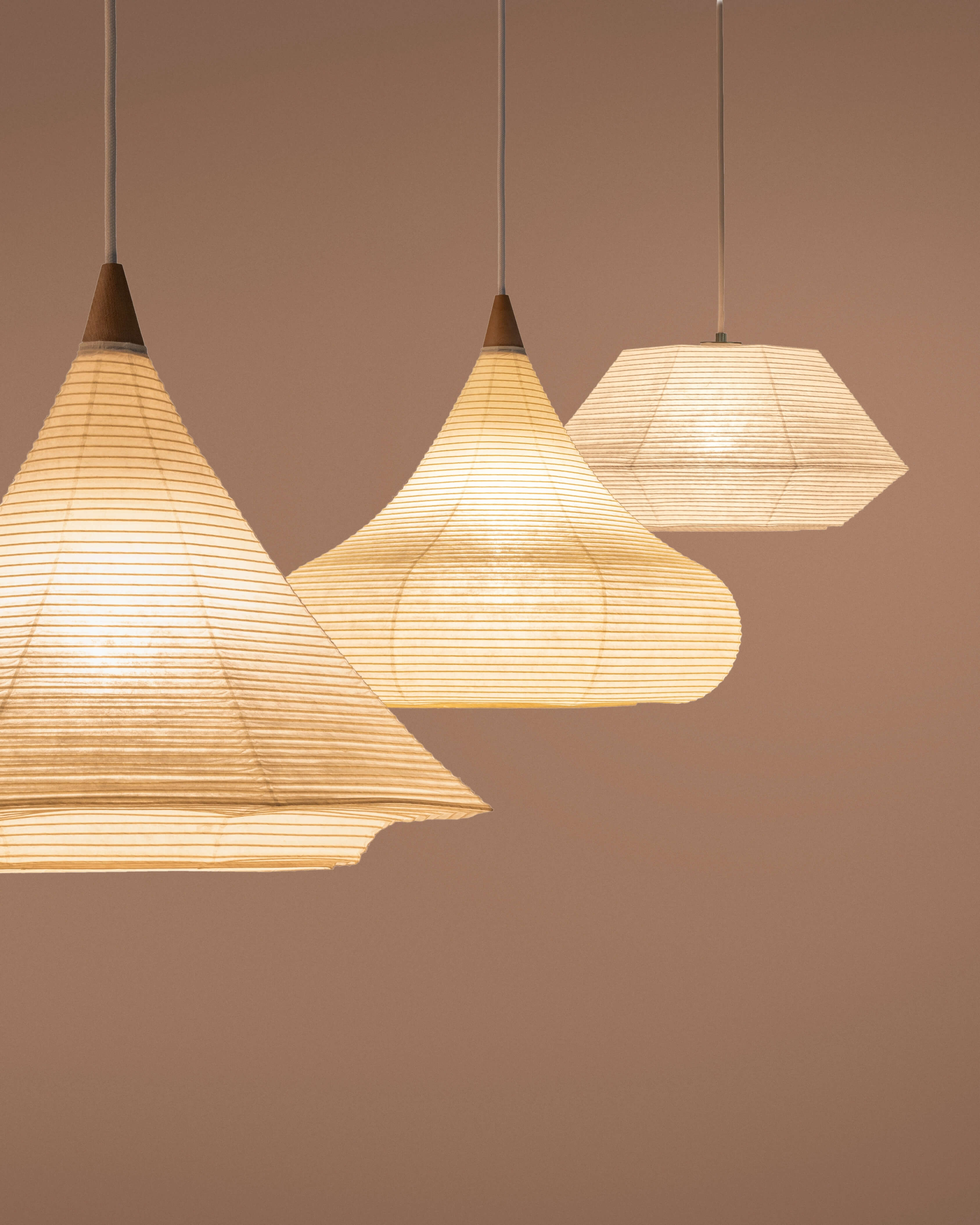
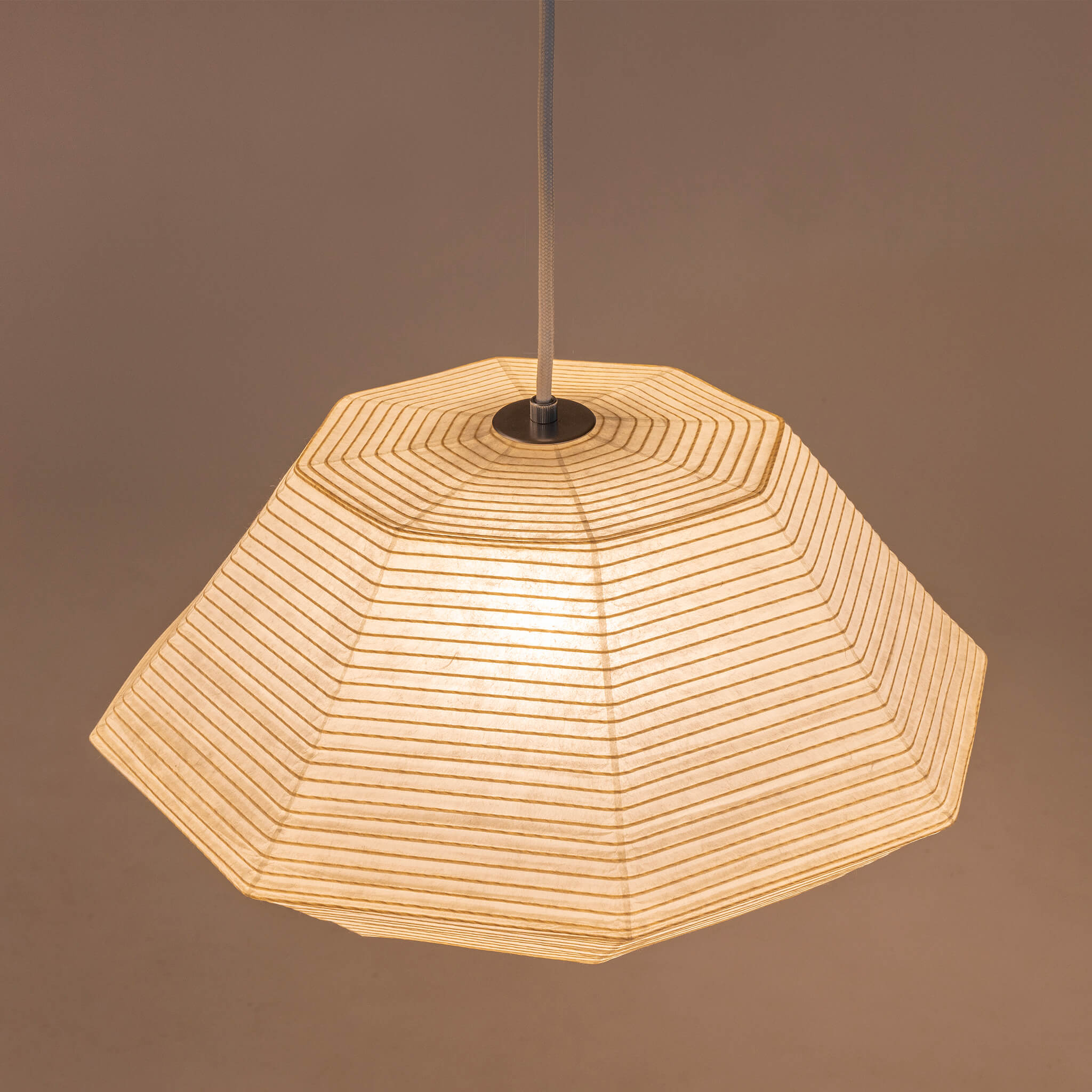
Tama Pendant
Designed by Toshiyuki Tani
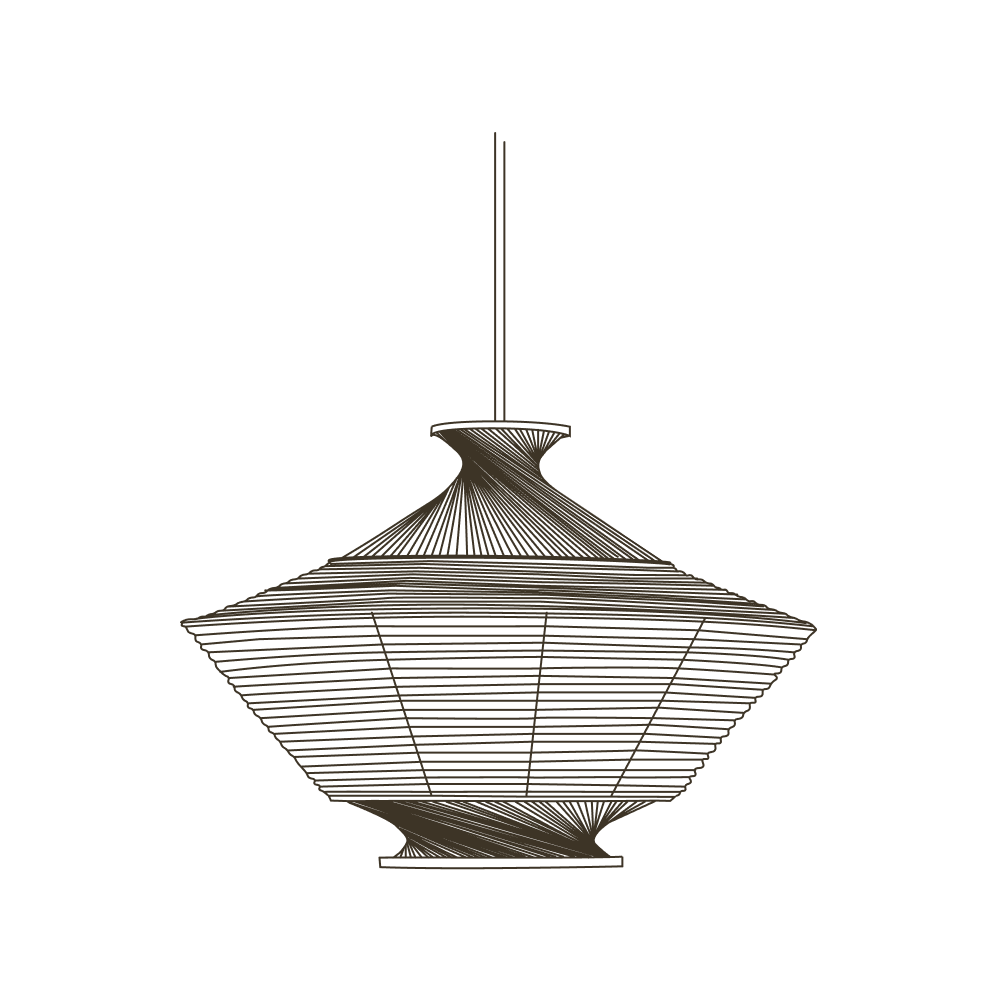
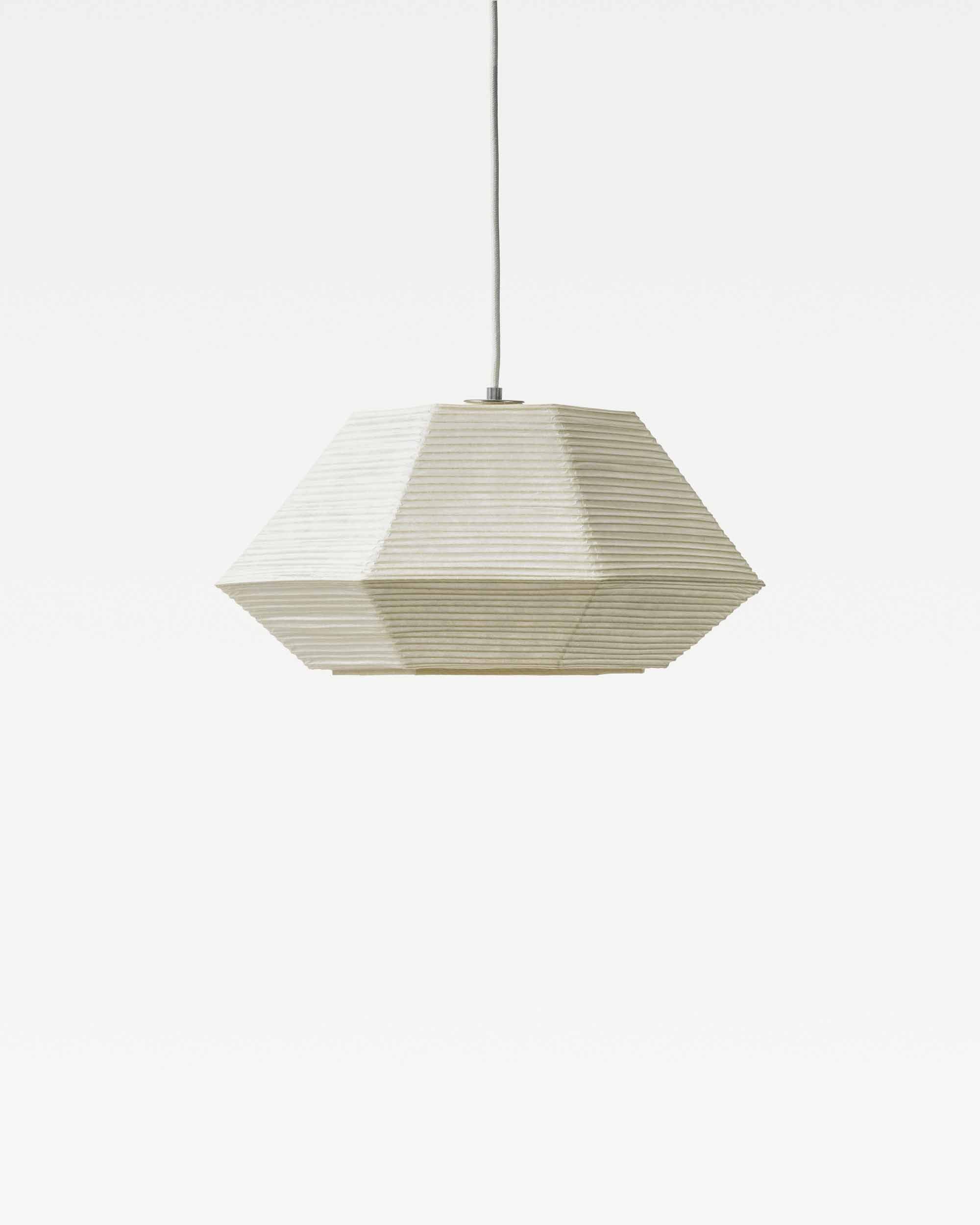
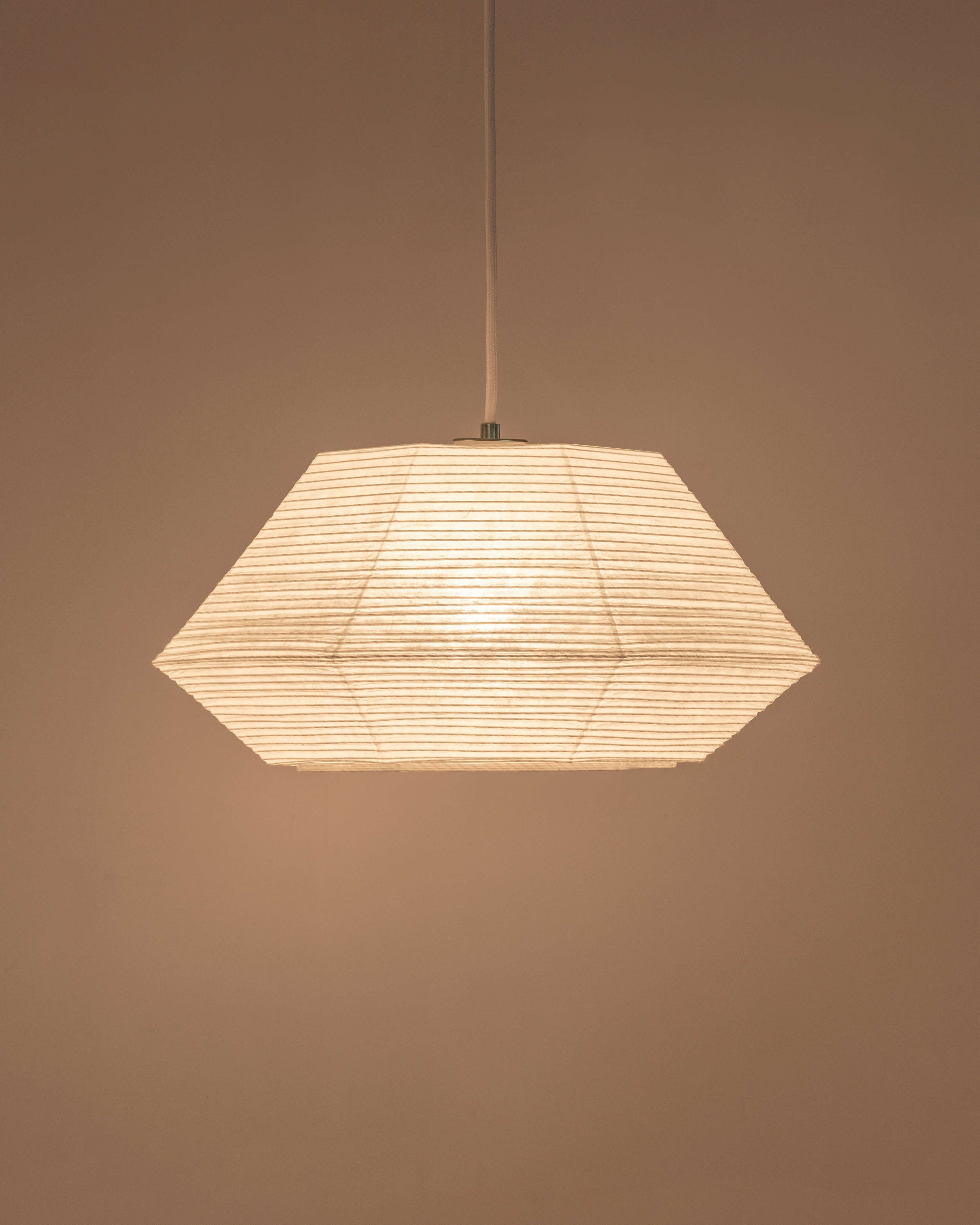
Tama, meaning jewel in Japanese, is cut like one, a wide, low lantern of faceted planes that catch the light differently from every side. It originates from Mito, one of Japan's primary regions for paper lantern craftsmanship. Where traditional lanterns use bamboo or wire for their internal frame, Tama uses a cast PET resin framework, allowing light to pass through the frame itself and minimising the shadow of the structure on the shade.
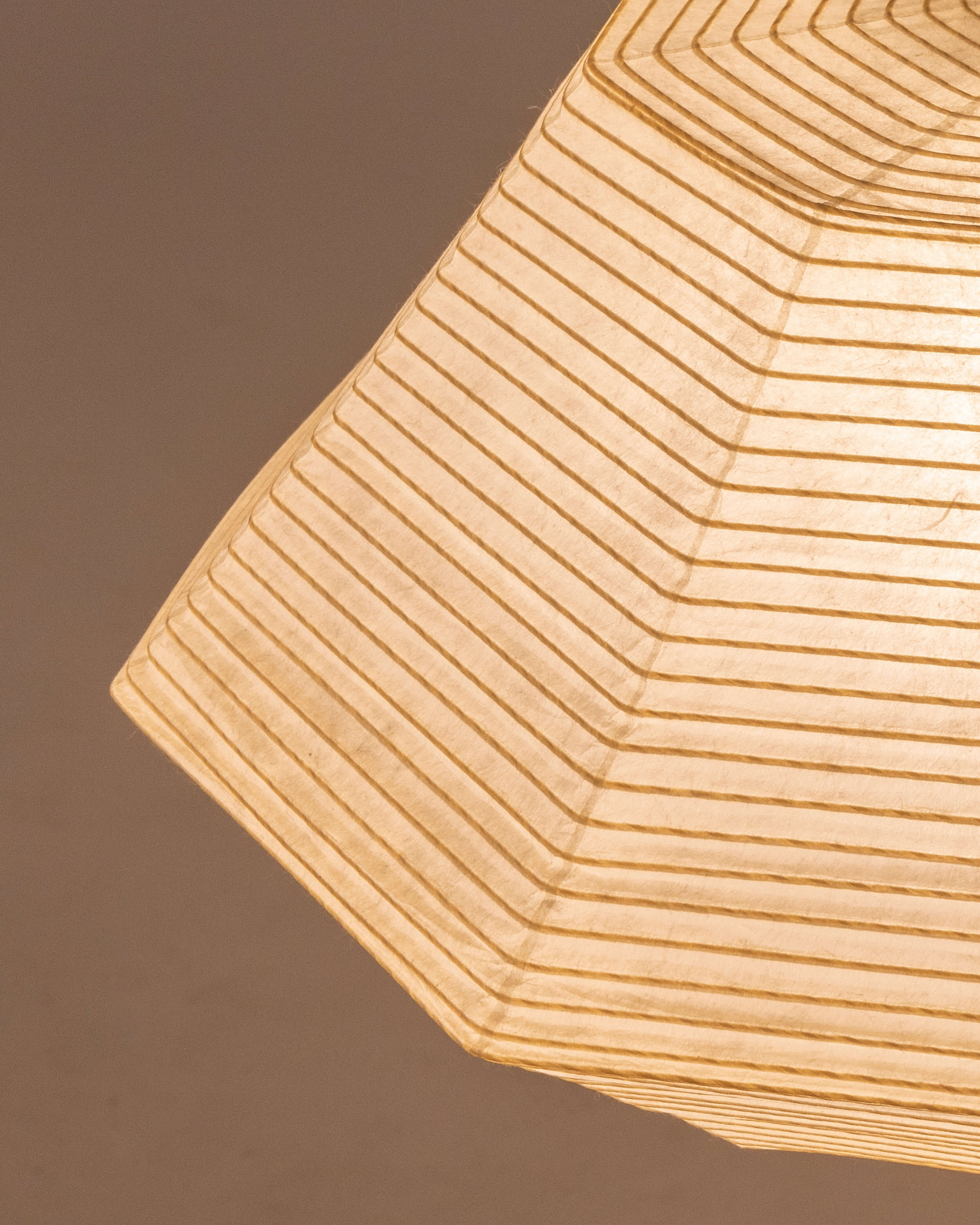
The washi paper exterior, a natural material with its own texture and warmth, has been treated to repel water and stains, incorporating eco-friendly components throughout. A slim metal disc completes the pendant at the top.
Choose options
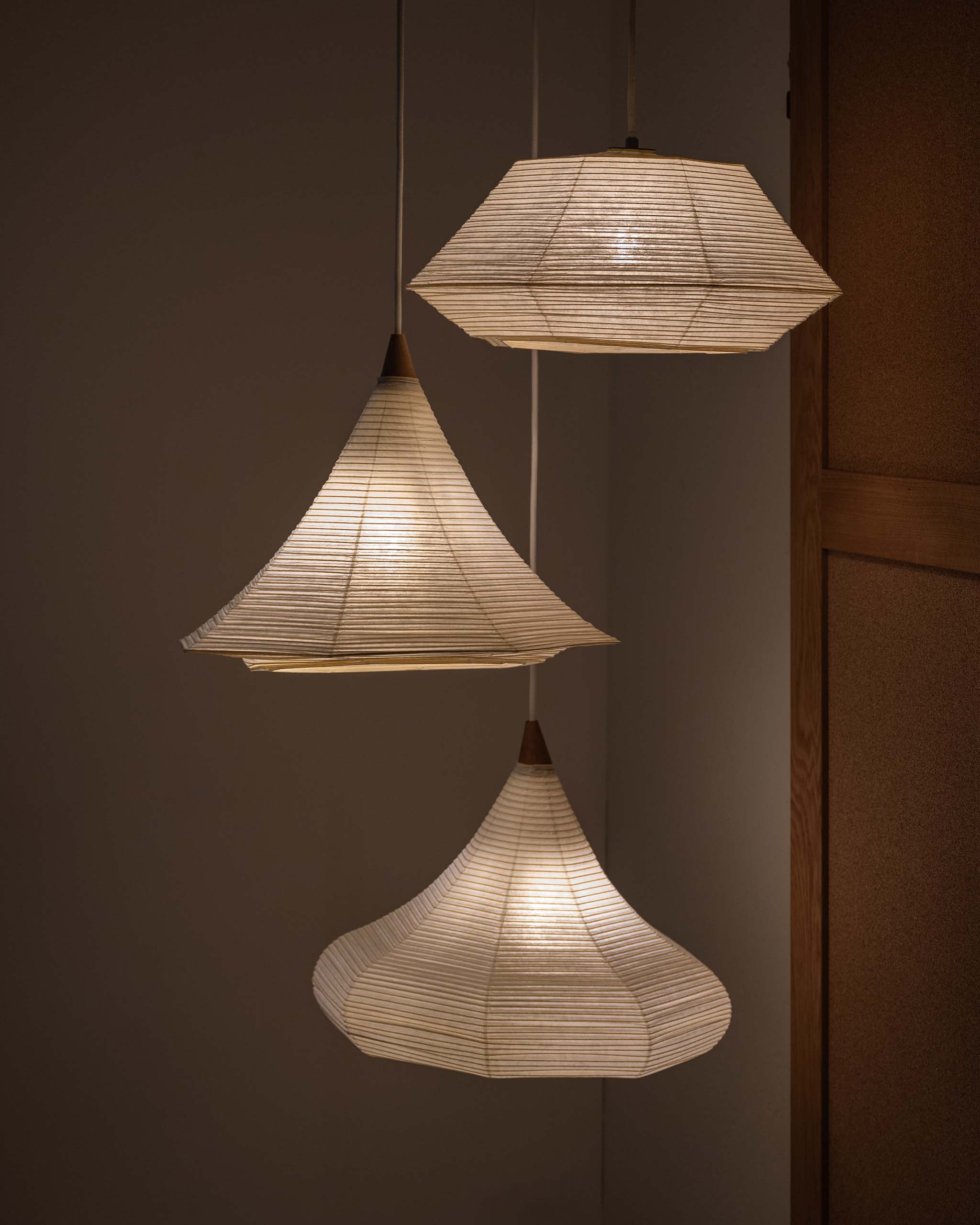
Tama takes its name from the Japanese word for a jewel, and the form follows: broad and low, its washi panels faceted like a cut stone so the light shifts across the planes as you move around it. Where Fuji rises to a peak and Shizuku swells into a droplet, Tama spreads horizontally. The widest and most geometric of the three.
That shape is held by heat treatment alone: where a lantern would normally rely on a bamboo or wire frame to keep its form, Tama needs none. In place of a frame, the washi is worked over a cast PET resin structure, so light passes through the framework itself and the structure casts almost no shadow on the shade.
The paper glows evenly, its surface treated to repel water and stains with eco-friendly components throughout. At the top, a slim metal disc completes the piece - a cooler, more precise finish than the wood cones of its companions, and fitting for the jewel.
Tama comes from Mito, one of Japan's primary regions for paper-lantern craft — a tradition carried down through generations. It is one of three lanterns in a series with Fuji and Shizuku: three different shapes sharing the same materials and craft.
Hung alone, each has its own character; grouped in a cluster, they compose beautifully together, varied in silhouette, unified in material and light.
Tama sits well above a dining table, in a corner of a room to give a cozy soft light, or in hospitality interiors.
- Washi paper shade on PET resin frames
- Steel plate on top
- White textile cord (3 metres)
The washi paper shade is crafted by Mito, one of Japan's three largest lantern makers, and treated with a coating for water and stain resistance. The bamboo will develop a traditional amber hue over time. When used in a room with high ventilation or with lots of sunlight the amber color will appear sooner.
As a natural material, each pendant may vary slightly in appearance. Also, colors shown on screen may vary slightly from the actual product.
- Width: 46 cm
- Height: 19 cm
- Depth: 46 cm
- Weight: 410 g
Tama is shipped in a solid outer cardboard box.
Dust can be removed from the shade using a soft dry cloth.
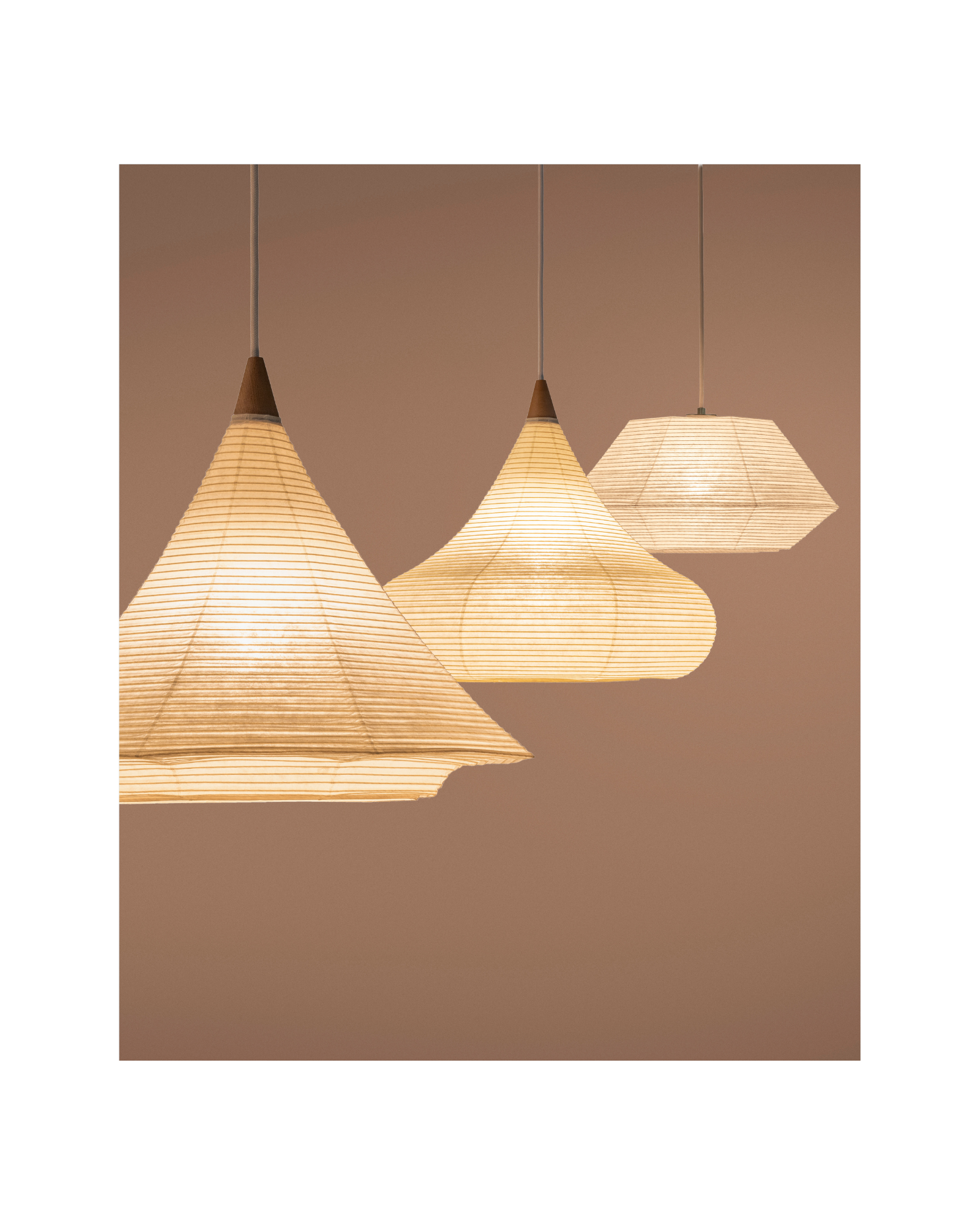
Fuji, Shizuku, Fiji
Three symbolic forms, one serene collection representing the poetry of nature
This trio of paper pendants reinterprets classic Japanese lantern craft, each named for a distinct natural element: Fuji for Japan’s iconic mountain, Shizuki for a drop of water and Tami for a jewel-like glow. Formed using a resin-treated washi paper, they embrace Japanese reverence for nature’s subtleties and Danish fascination with functional, atmospheric lighting.
“We challenged ourselves to express softness with only straight lines and their combination.”
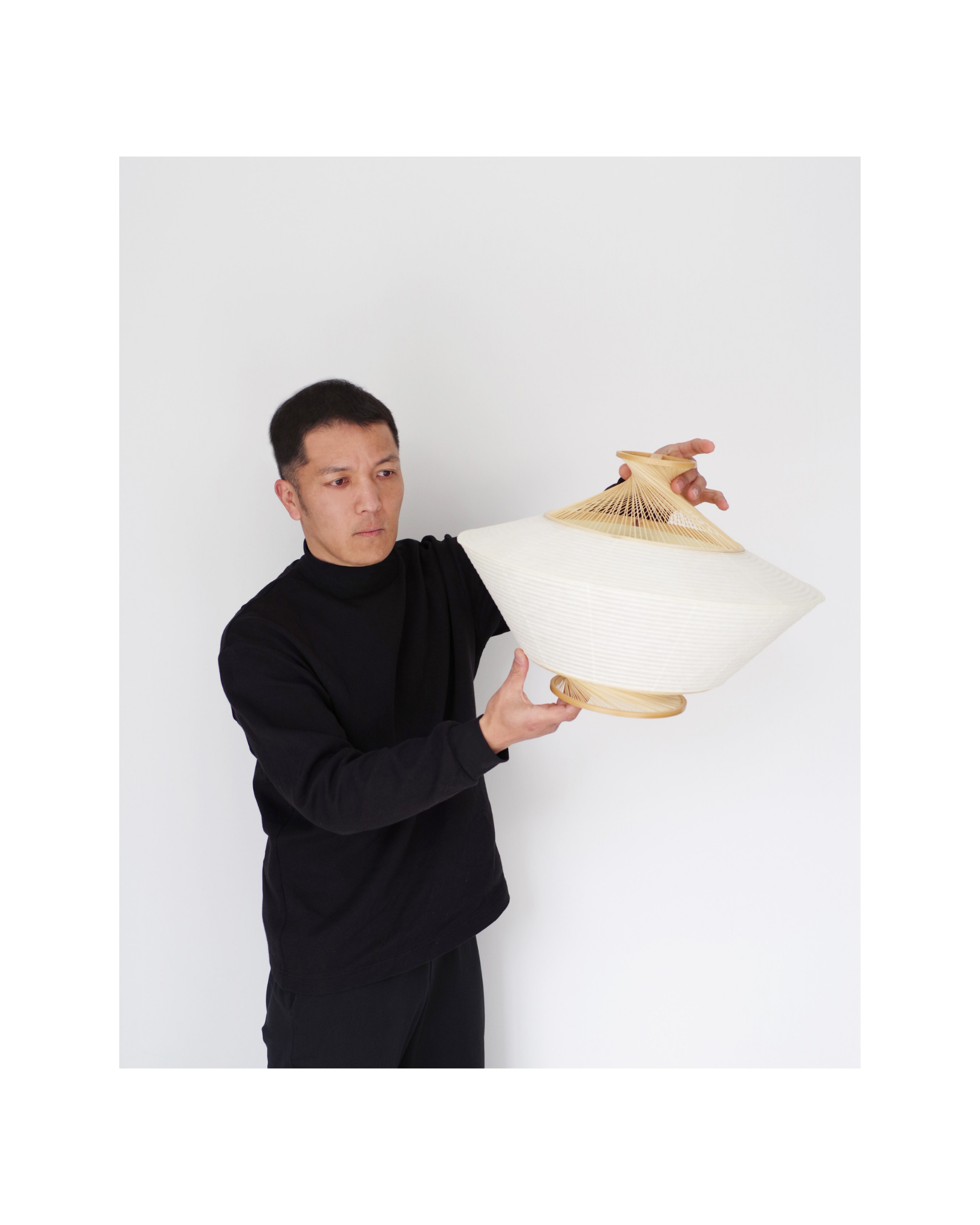
Designed by
Toshiyuki Tani
A Japanese designer and craftsman, Toshiyuki Tani bridges centuries-old bamboo traditions and contemporary design. His work is defined by a deep reverence for natural form, the hands that shape it, and the light that moves through it.