

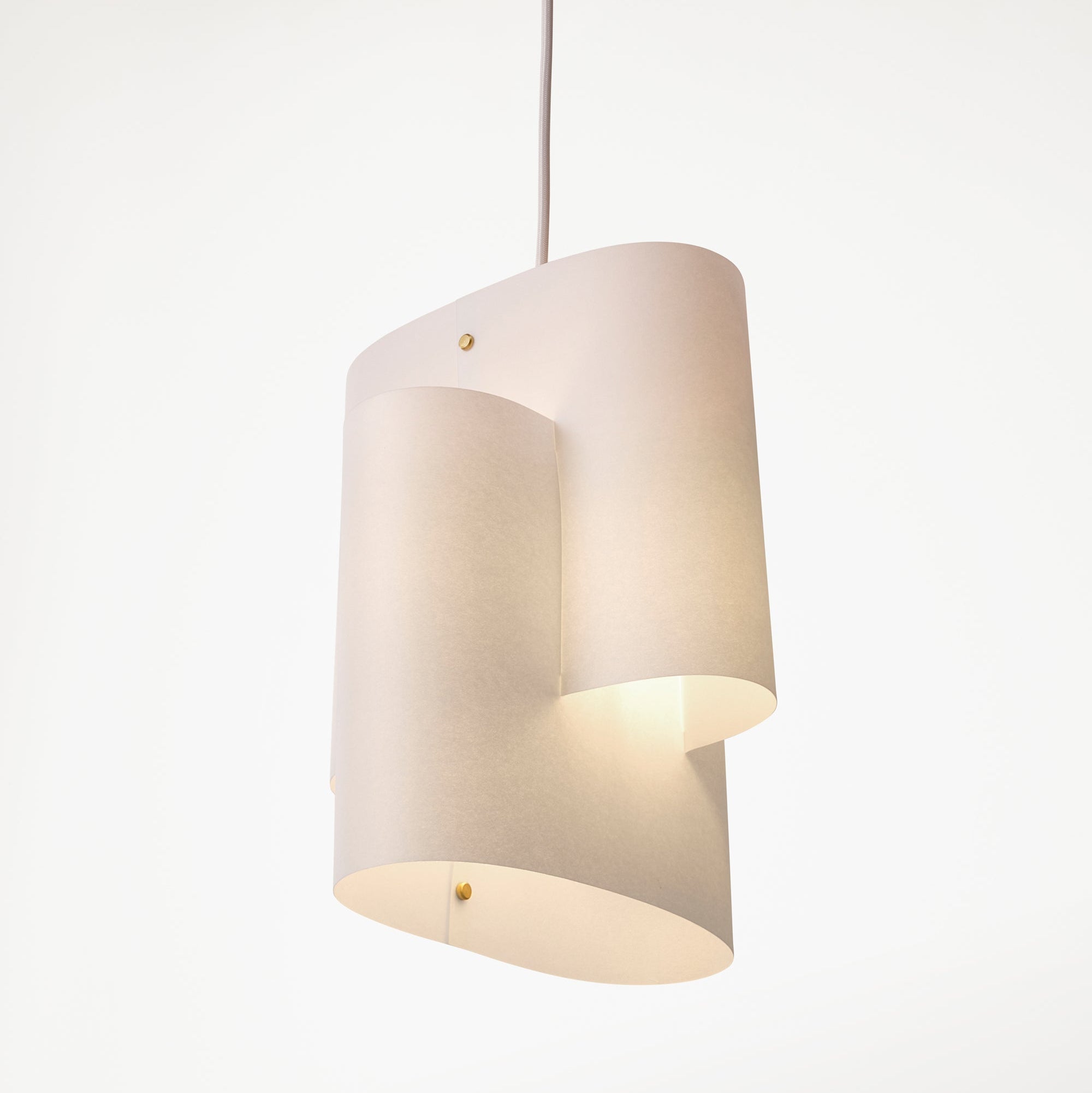
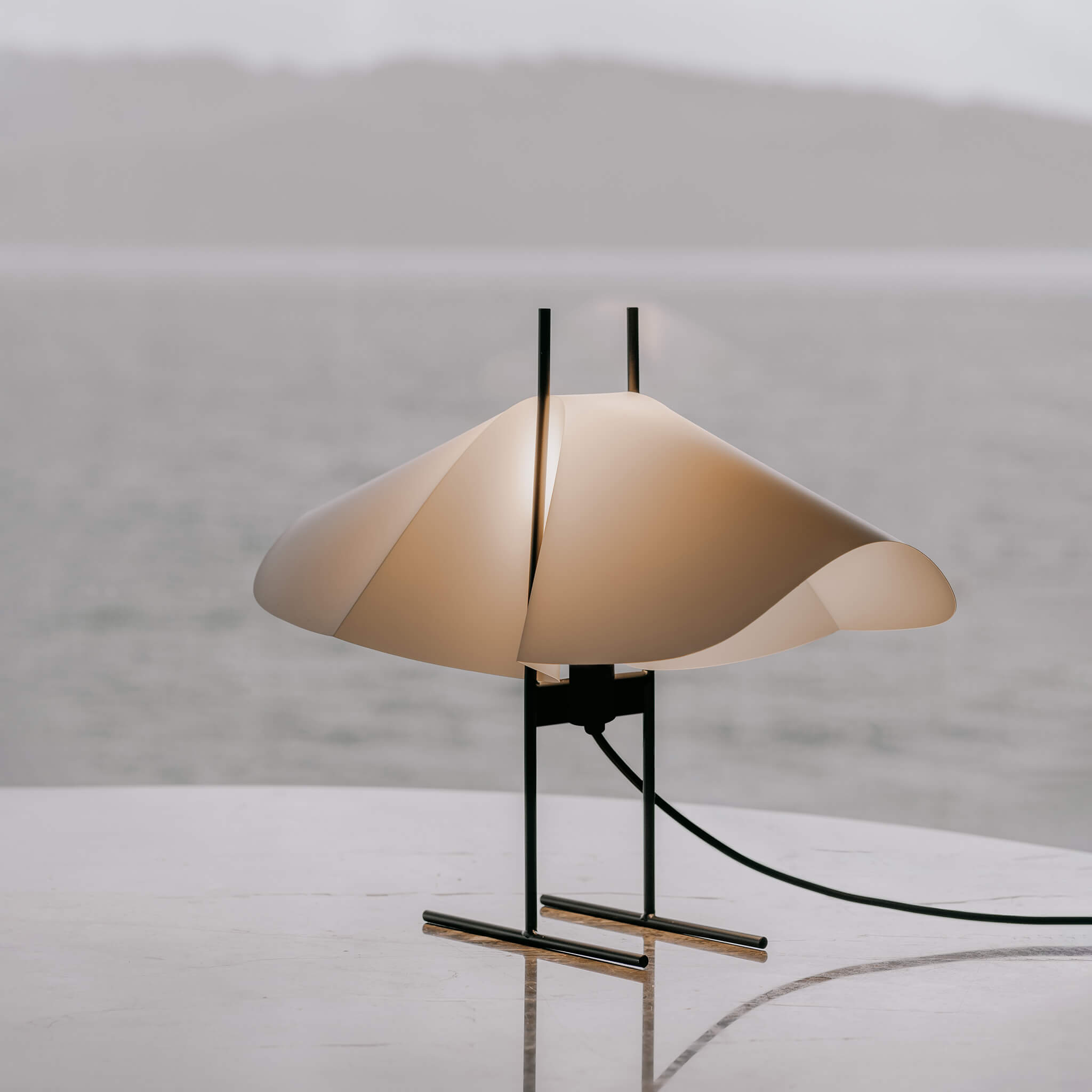
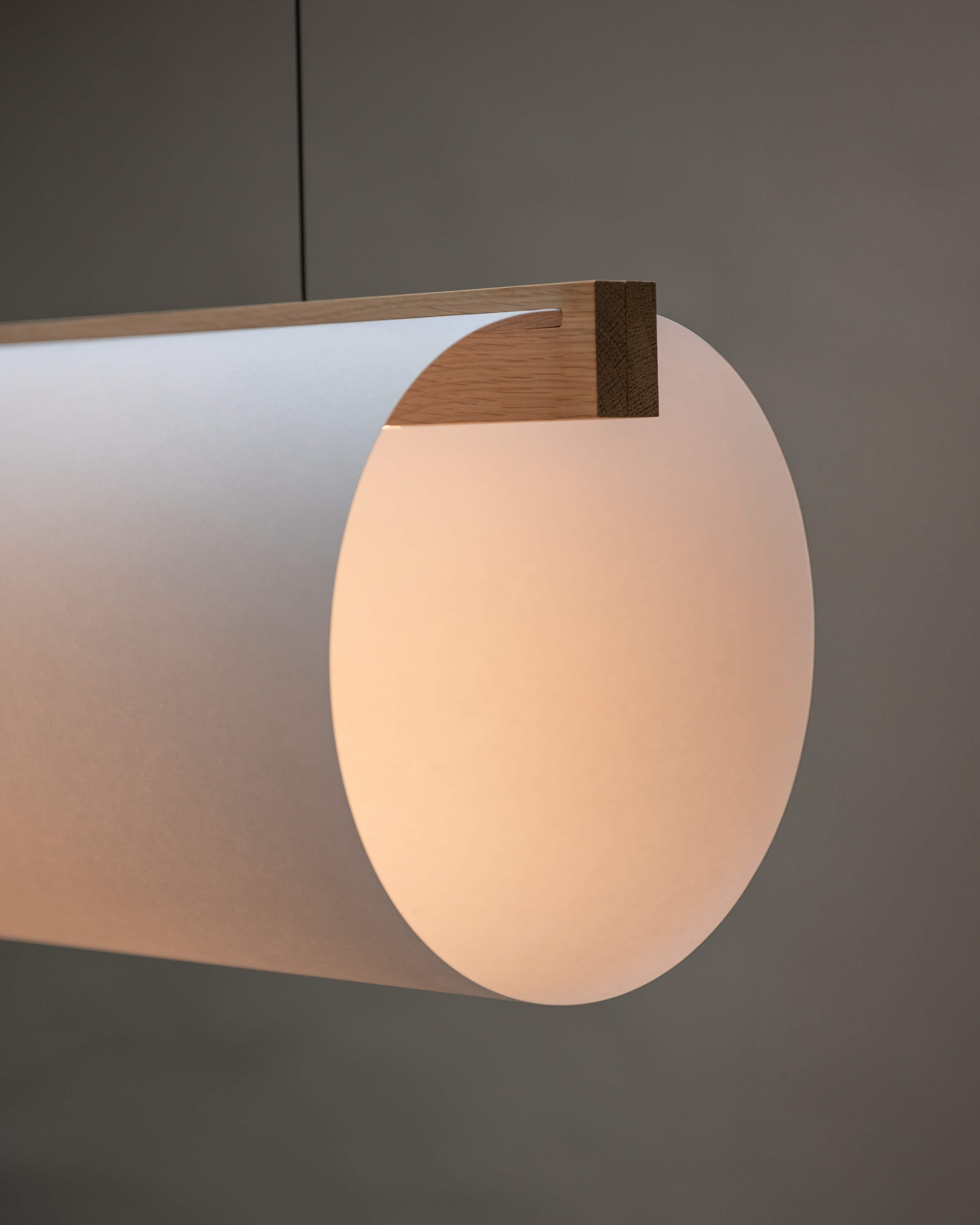
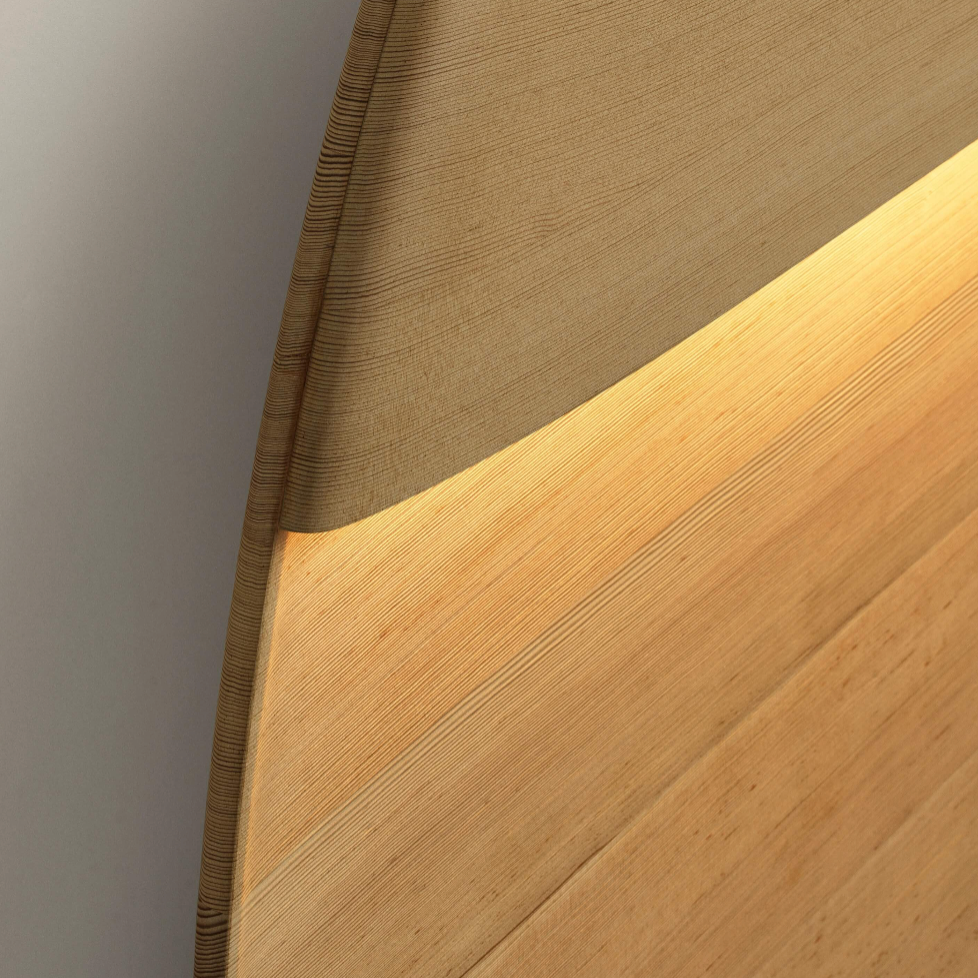



Tsumugi B Pendant
Designed by Toshiyuki Tani
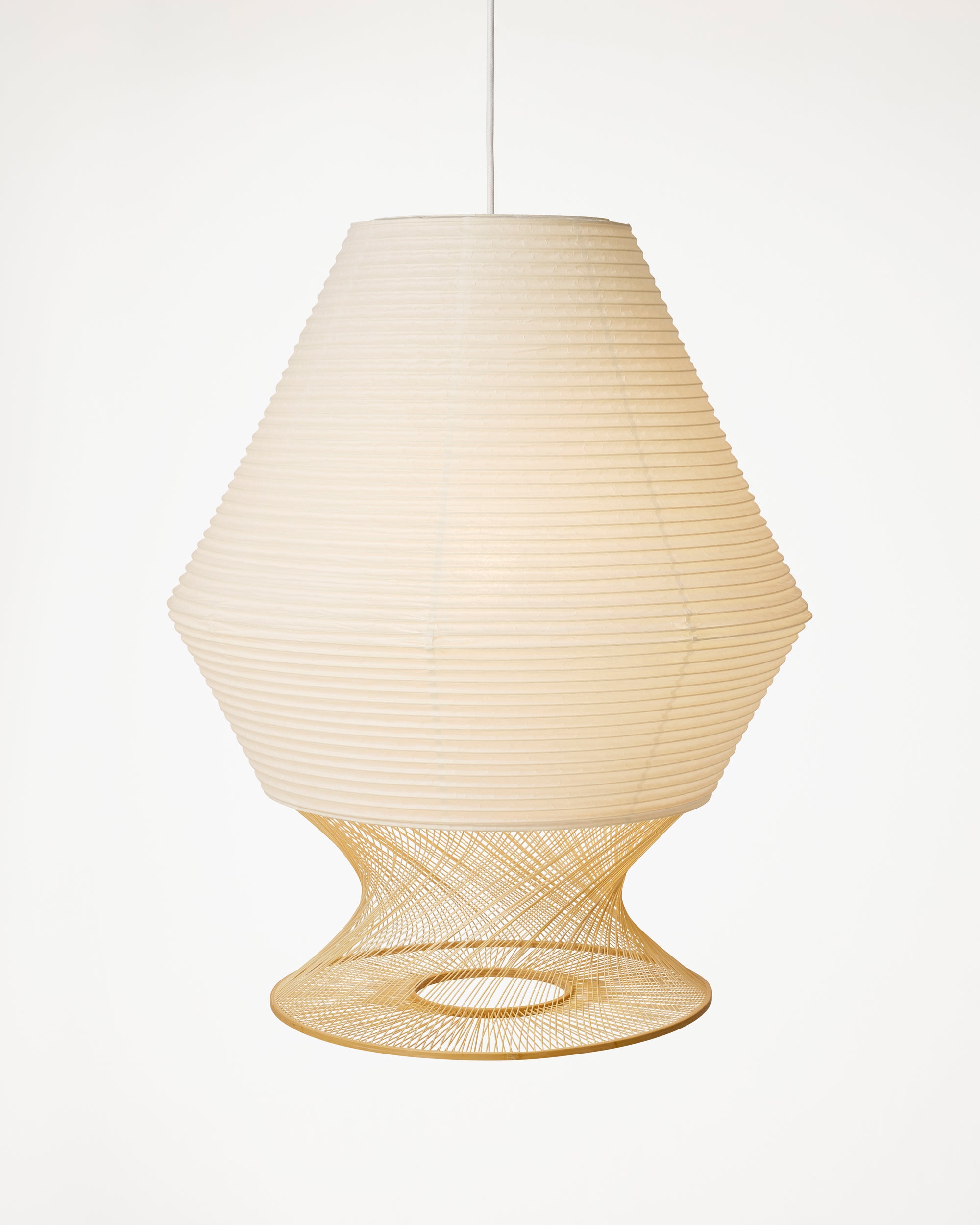
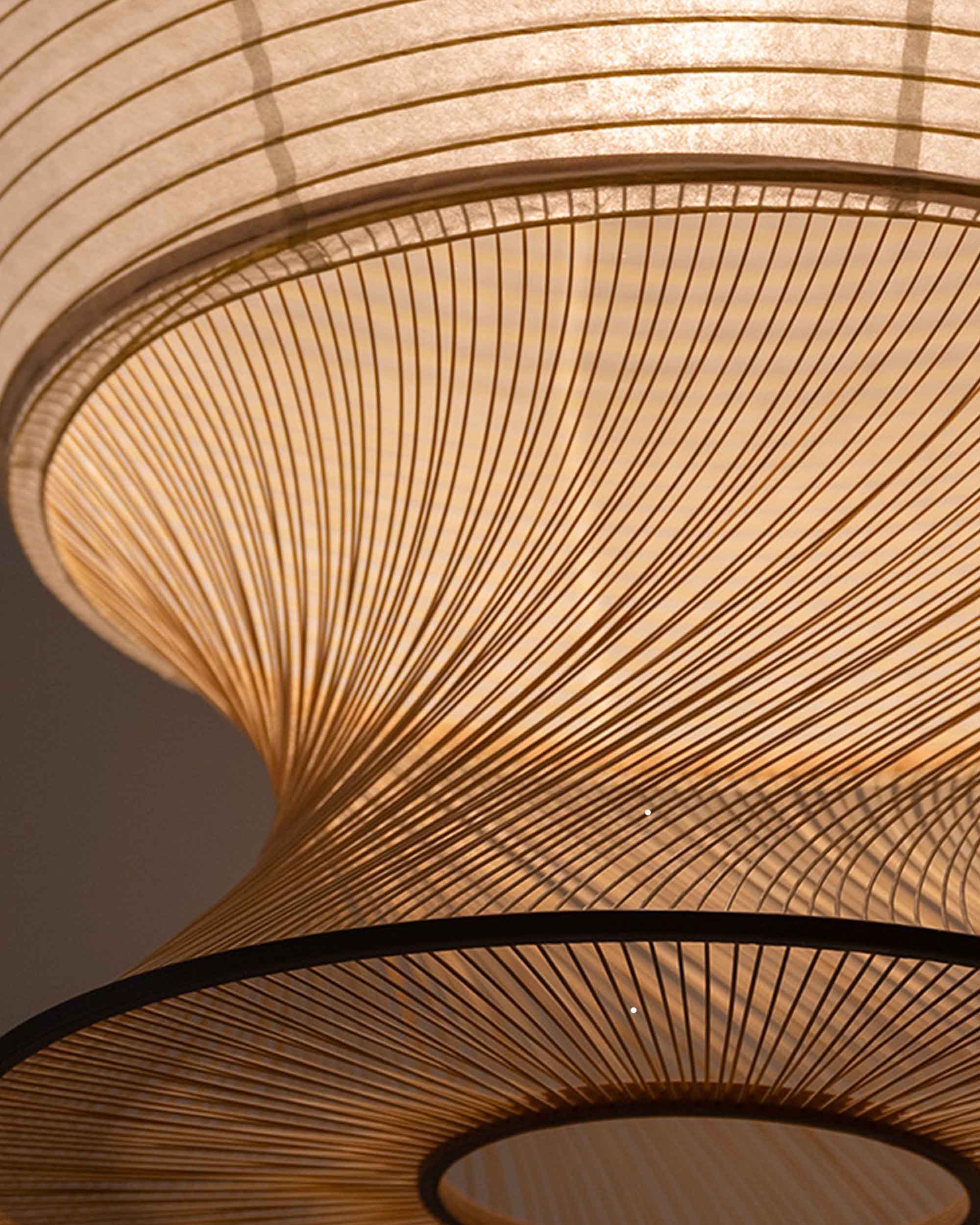
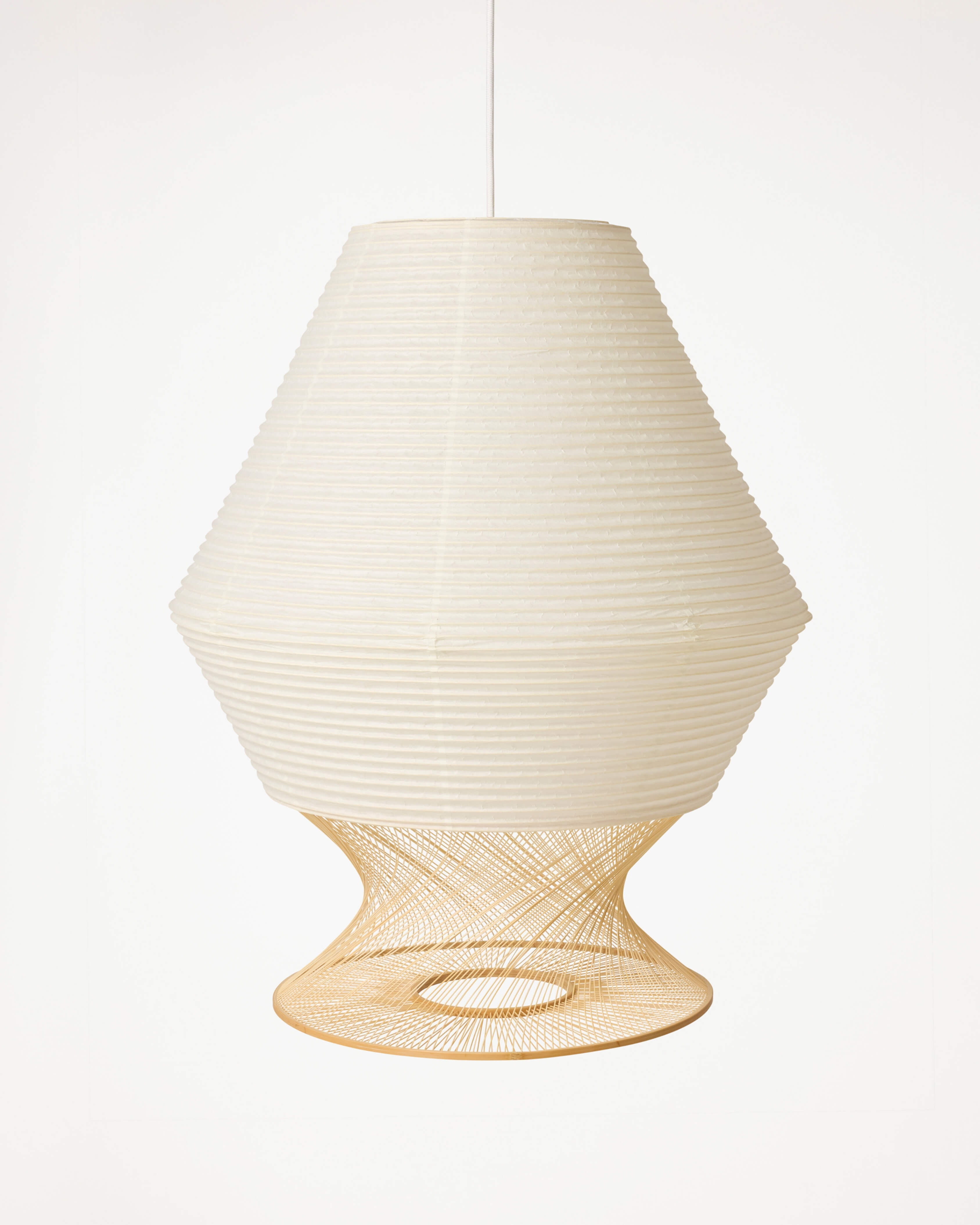
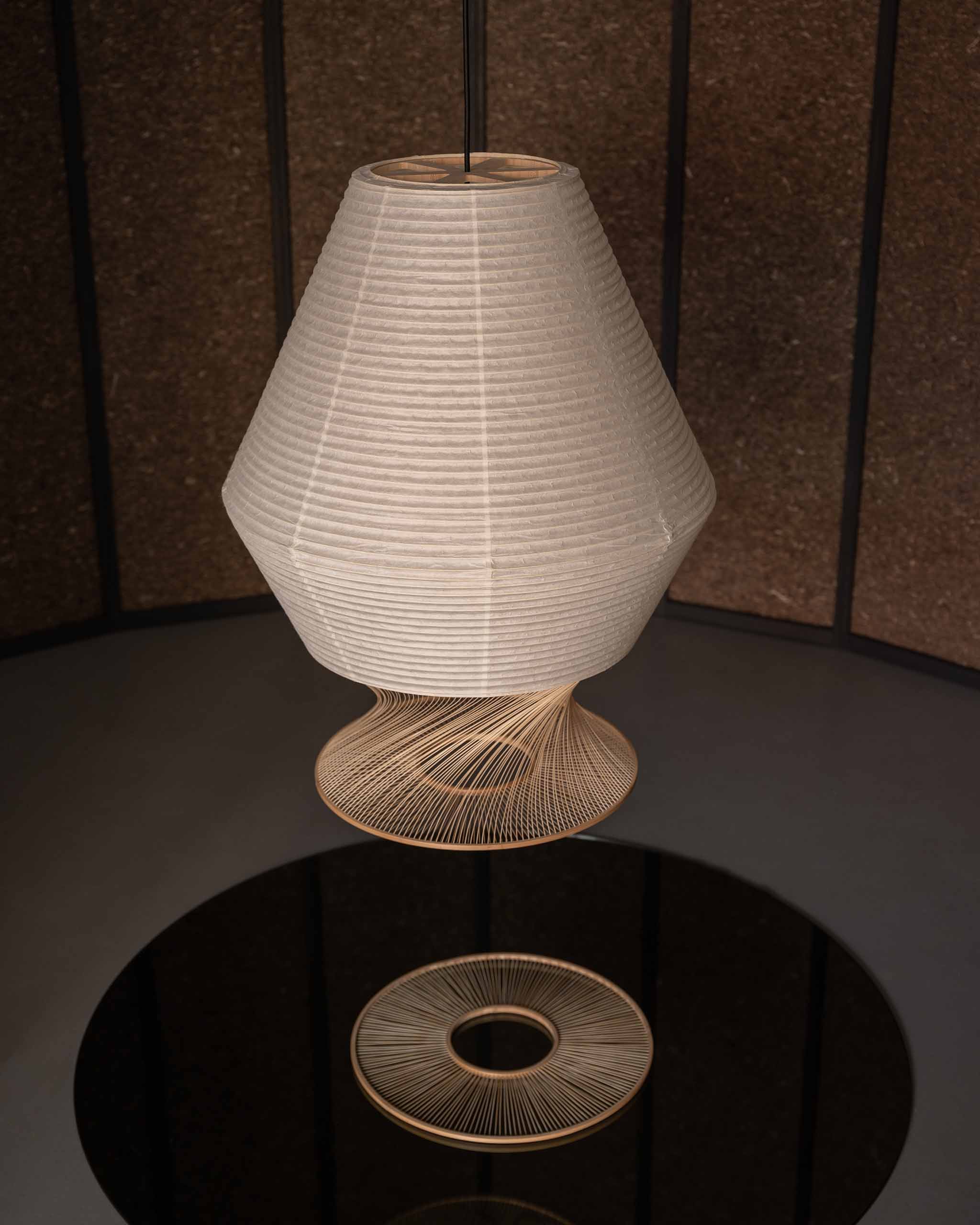
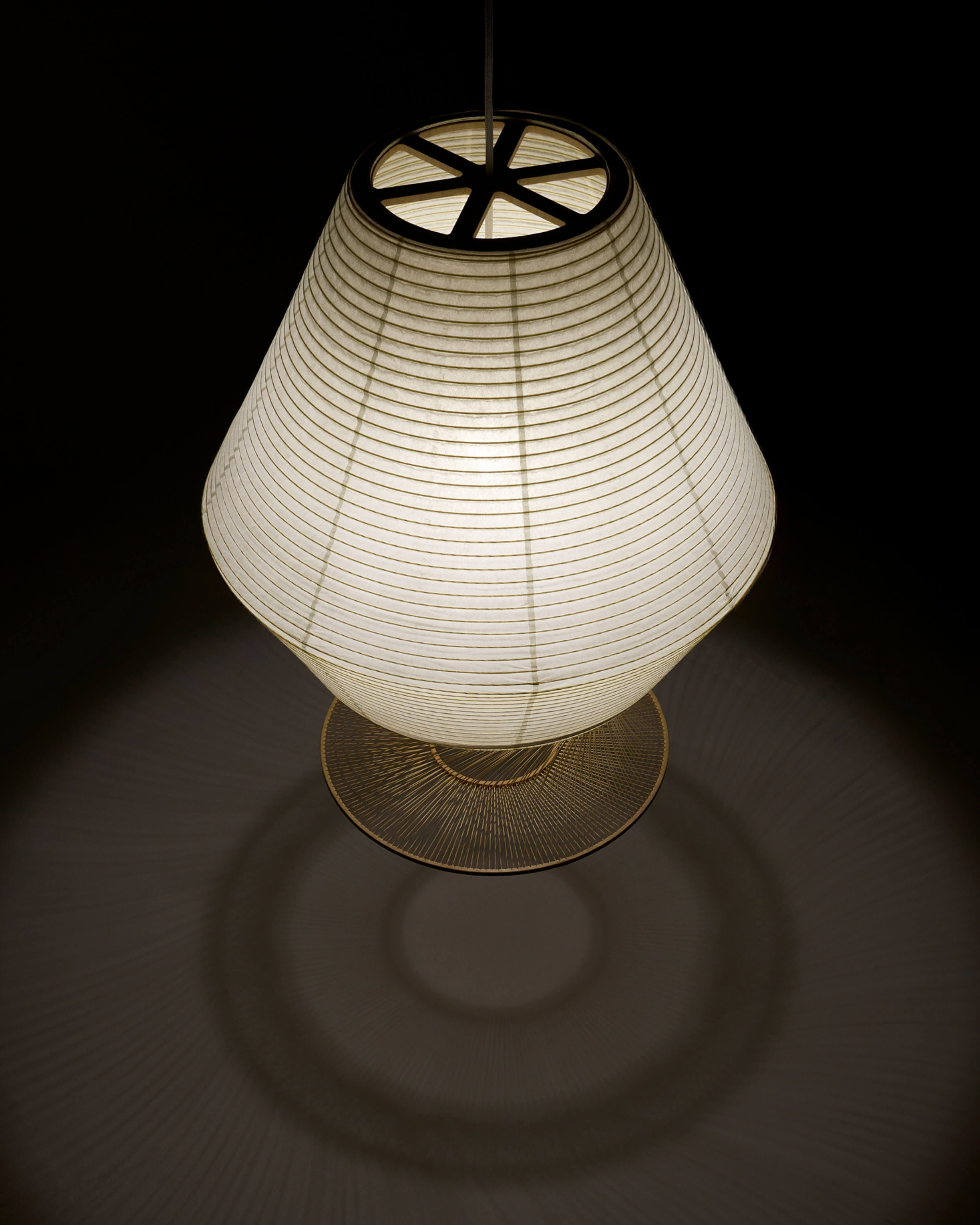
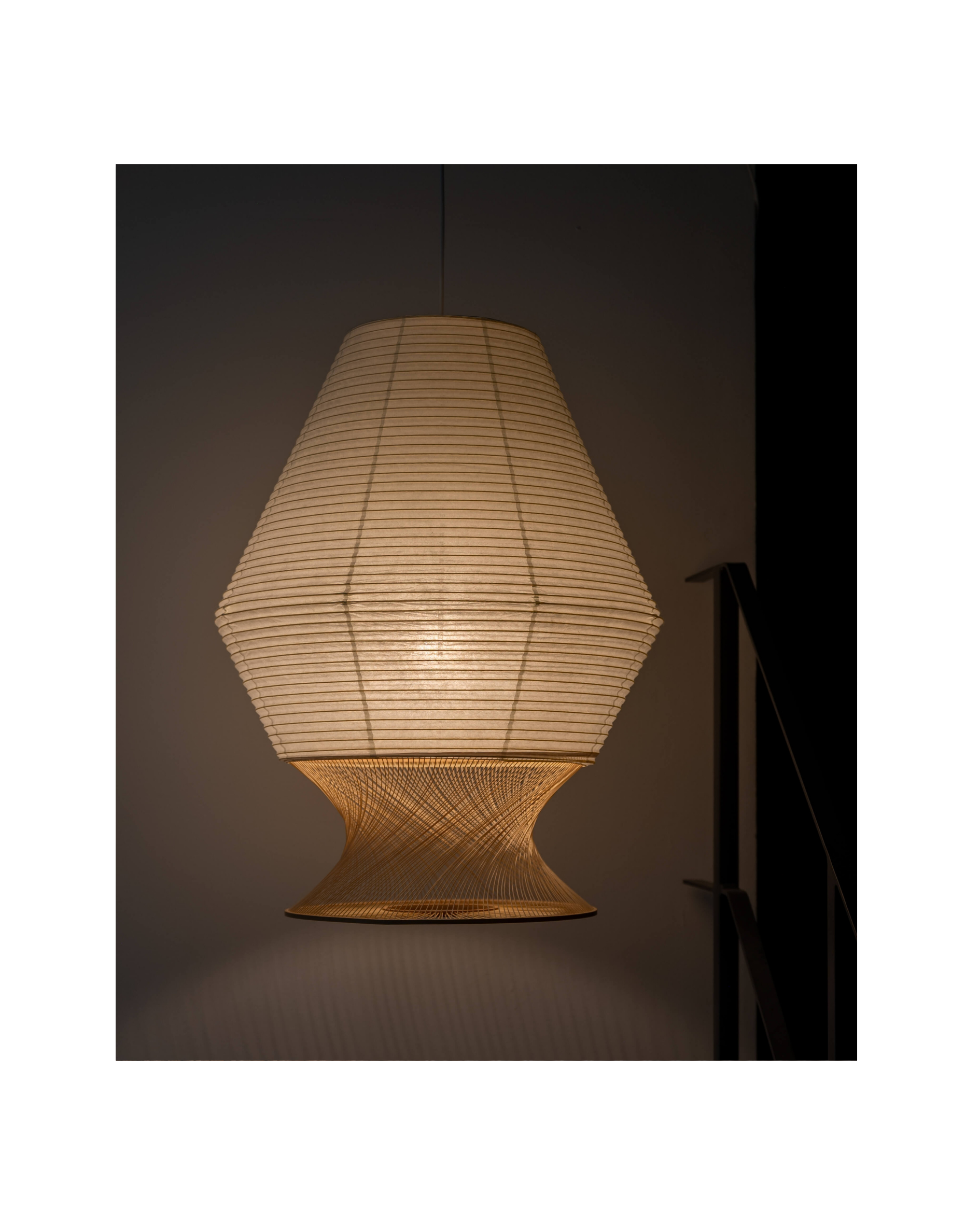
"紡ぎ Tsumugi" means to weave together: a union of tradition, material and light. Tsumugi B is expressive at its base. The intricately handwoven bamboo piece steps forward as the focus, worked in the traditional Suruga takesensuji craft and bent by hand, never by heat, so its curves follow the natural give of the bamboo rather than a perfect line.
Above it rises a softly glowing washi lantern, thin natural paper wrapped around fine resin strips to keep the light even; standing nearly 80 cm tall, it fills a space rather than accents it.
The washi is handcrafted in Mito. Handmade in Japan.
Each Tsumugi is made by hand in Japan, to order — please allow around 3–4 months for delivery. The wait is the craft.
Choose options
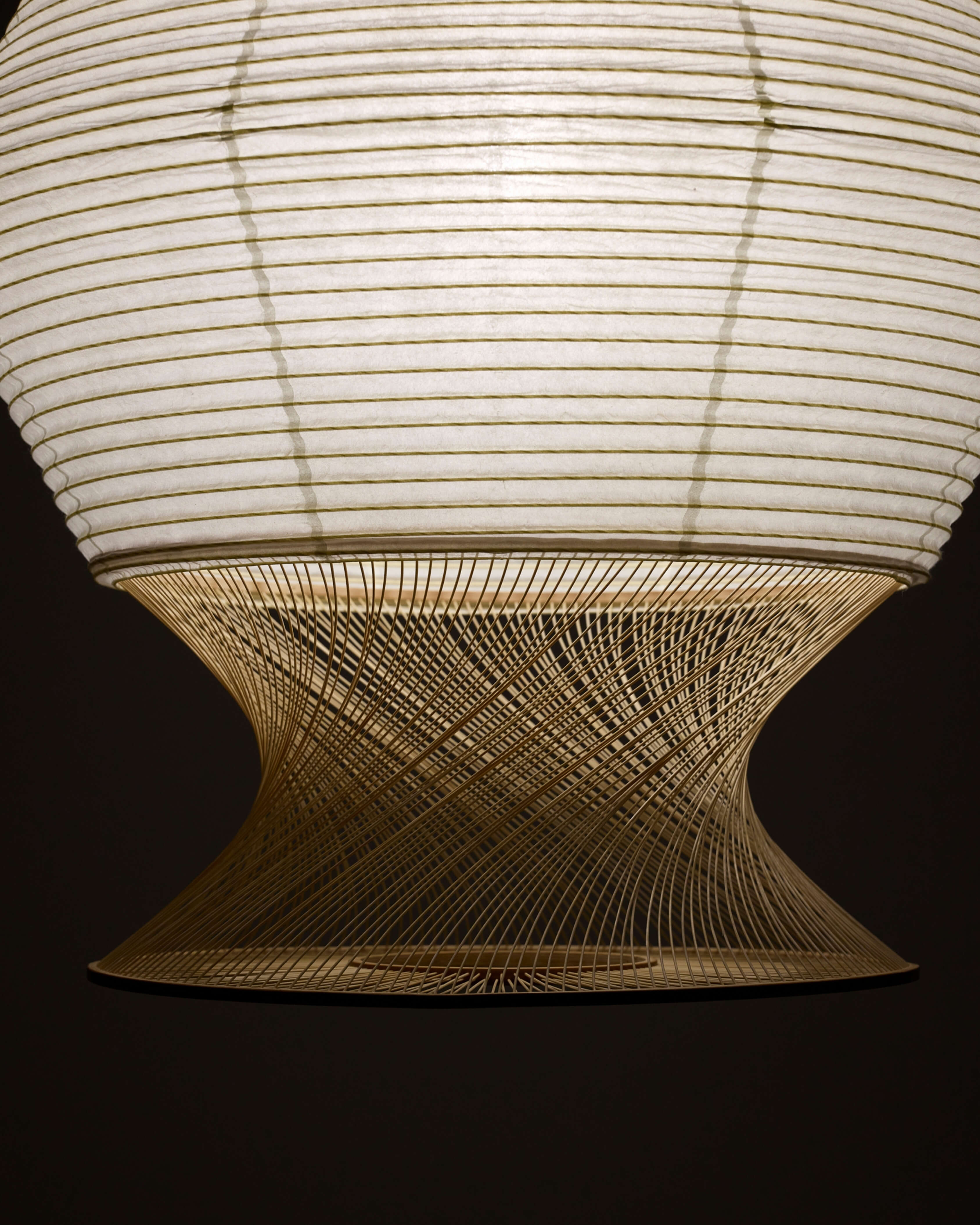
In Tsumugi B, thin washi paper is wrapped around fine PET resin strips, roughly 75 metres of resin-treated internal structure in all, the spacing kept deliberately close — giving an even, soft glow while suppressing the shadow the strips would otherwise cast.
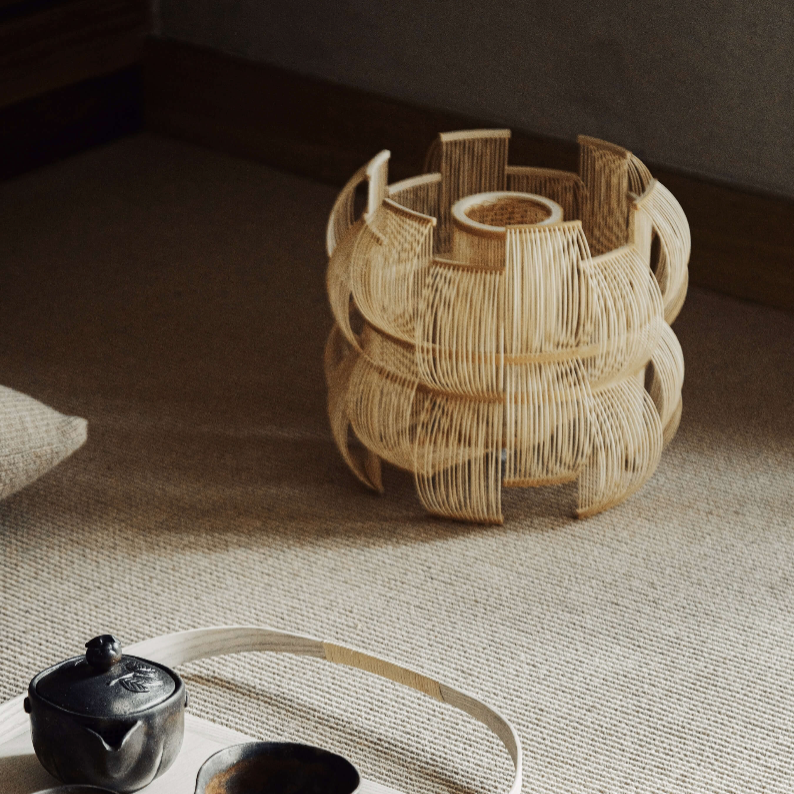
The bamboo tells the opposite story. Handwoven at the base in the traditional Suruga takesensuji craft, each strip is bent slowly by hand rather than shaped with heat, so no two curves are quite alike. It is the material left to breathe: Lines drawn by natural rhythm rather than perfect balance. In the woven bamboo, the shadow becomes deliberate and sculptural.
Over time, the bamboo develops a sought-after amber hue, deepening gradually with use, or sooner in spaces with strong ventilation or direct sunlight.
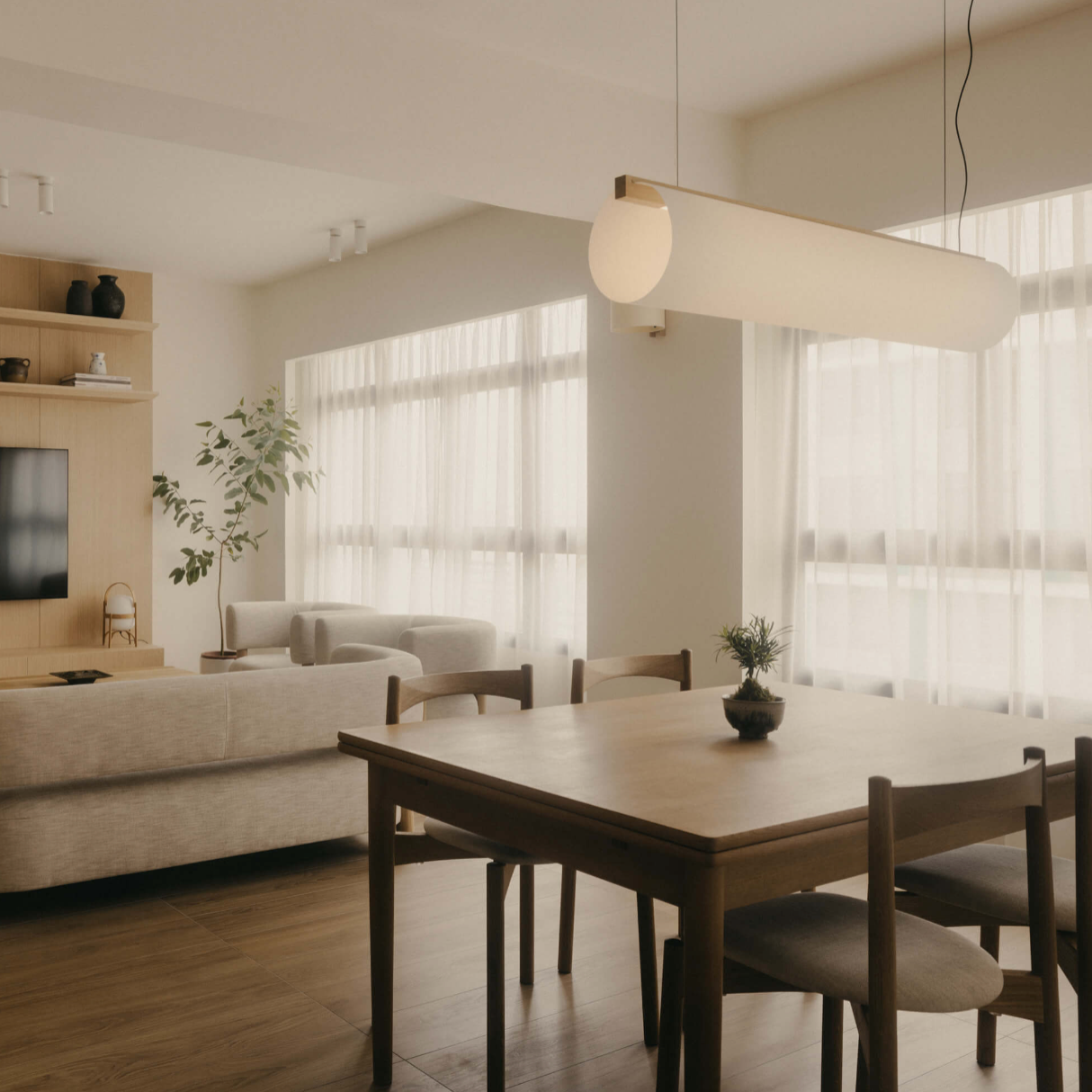
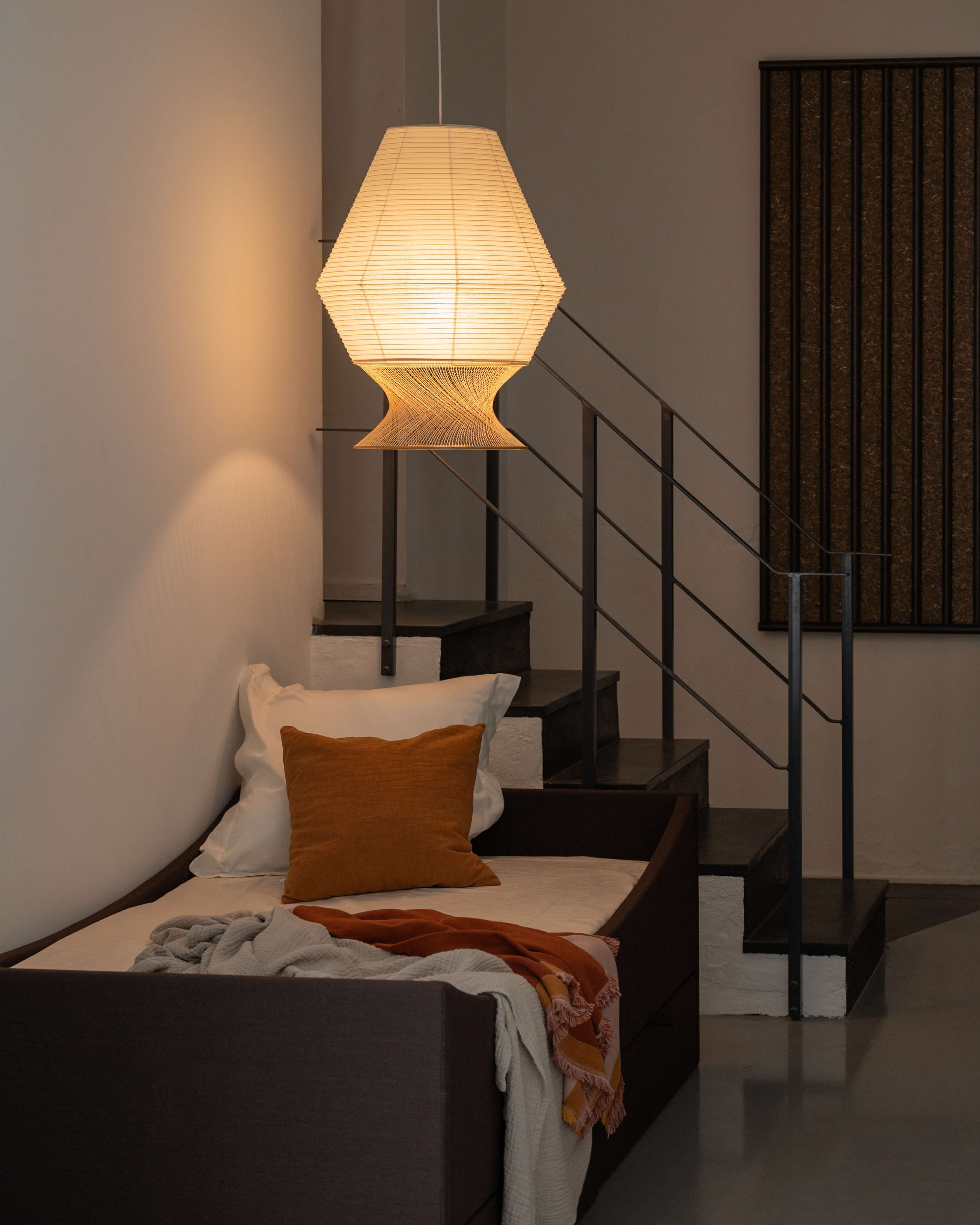
At 78 cm tall and 58 cm across, Tsumugi B comes into its own where there is volume to fill, a hotel atrium or lobby, or a home with high ceilings, a double-height room, an open stairwell. It has the scale to hold a large space, and the softness to do it gently: presence without weight, atmosphere rather than brightness. In a bedroom with height, that combination is a rare one: scale enough to fill the volume, light soft enough to rest under. Lit, the woven bamboo casts its shadow across the surfaces around it, adding a further layer to the room.
For a quieter version of the same idea, its companion Tsumugi A sets a flat bamboo disk beneath a smaller form.
- Natural washi paper shade with PET resin strips
- hand-bent Suruga bamboo structure in the bottom
- Bamboo top structure
- White textile cord
The washi paper shade is crafted by Mito, one of Japan's three largest lantern makers, and treated with a coating for water and stain resistance. Even if very thin, the paper is strong and durable. The bamboo will develop a traditional amber hue over time.
As a natural material, each pendant may vary slightly in appearance. Also, colors shown on screen may vary slightly from the actual product.
Colors shown on screen may vary slightly from the actual product.
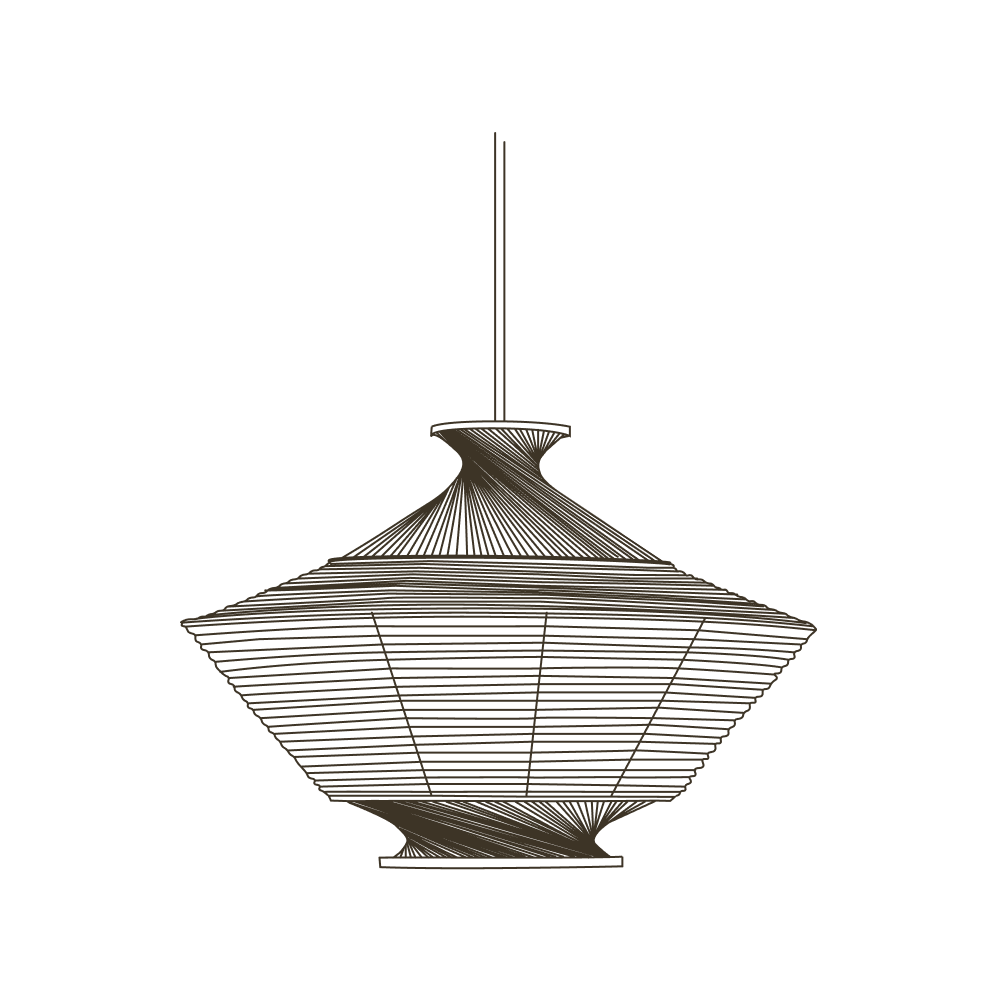
- Shade ø: 58 cm, height: 78 cm
- Weight pendant: 0.4 kg
- Canopy: Ø 11.5 cm, H 2.5 cm
- Cord length: 3 m textile cord
- Socket: E27 porcelain,
- Bulb: we recommend a clear, warm-white, around 800 lumens (equivalent to a traditional 60W bulb; roughly 7–9W as an LED) (not included)
Tsumugi B is shipped in a solid outer box designed for secure transport. The shade is arrives flat, keeping breakage and transit material to a minimum.
Dust can be removed from the shade using a soft dry cloth.

“We challenged ourselves to express softness with only straight lines and their combination.”
“紡ぎ Tsumugi” means weaving
From a single stalk of bamboo, a form emerges. Shaped by craftsmanship and the gentle unpredictability of nature. Guided by years of experience, bamboo is refined and paired with thin washi paper, carefully wrapped around finely spaced ribs, creating nearly 75 meters of internal structure within each piece.
The structure is finished with resin-treated washi paper, helping the light diffuse softly while avoiding unwanted shadows.
These lamps are rooted in the Japanese chōchin (提灯) lantern tradition, crafted from split bamboo ribs and handmade washi paper. A craft practiced for centuries in regions such as Gifu and Mito in Japan.


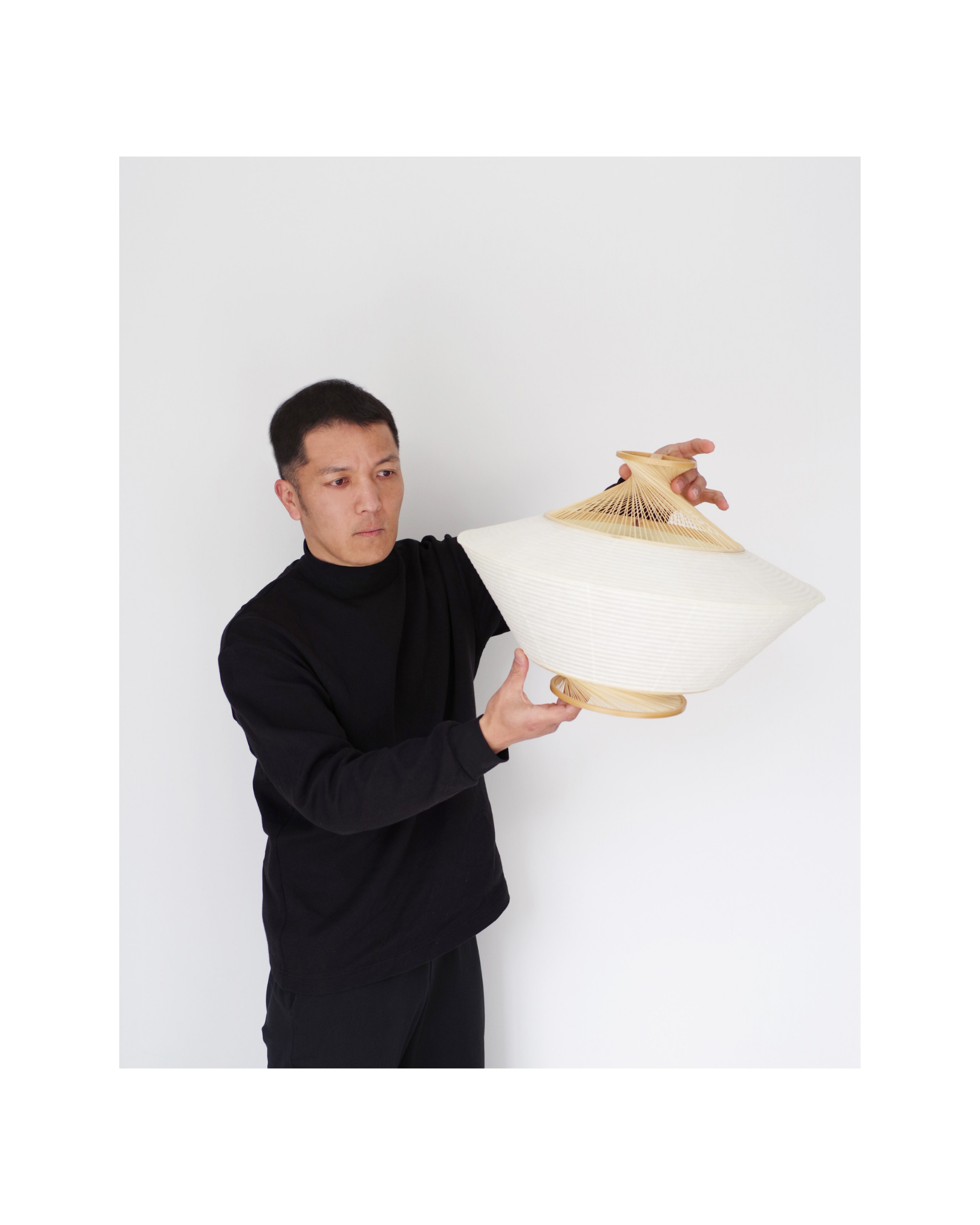
Designed by
Toshiyuki Tani
A Japanese lighting designer and craftsman, Toshiyuki Tani bridges centuries-old bamboo traditions and contemporary design. His work is defined by a deep reverence for natural form, the hands that shape it, and the light that moves through it.